The Road To Wigan Pier
Condition remarks:
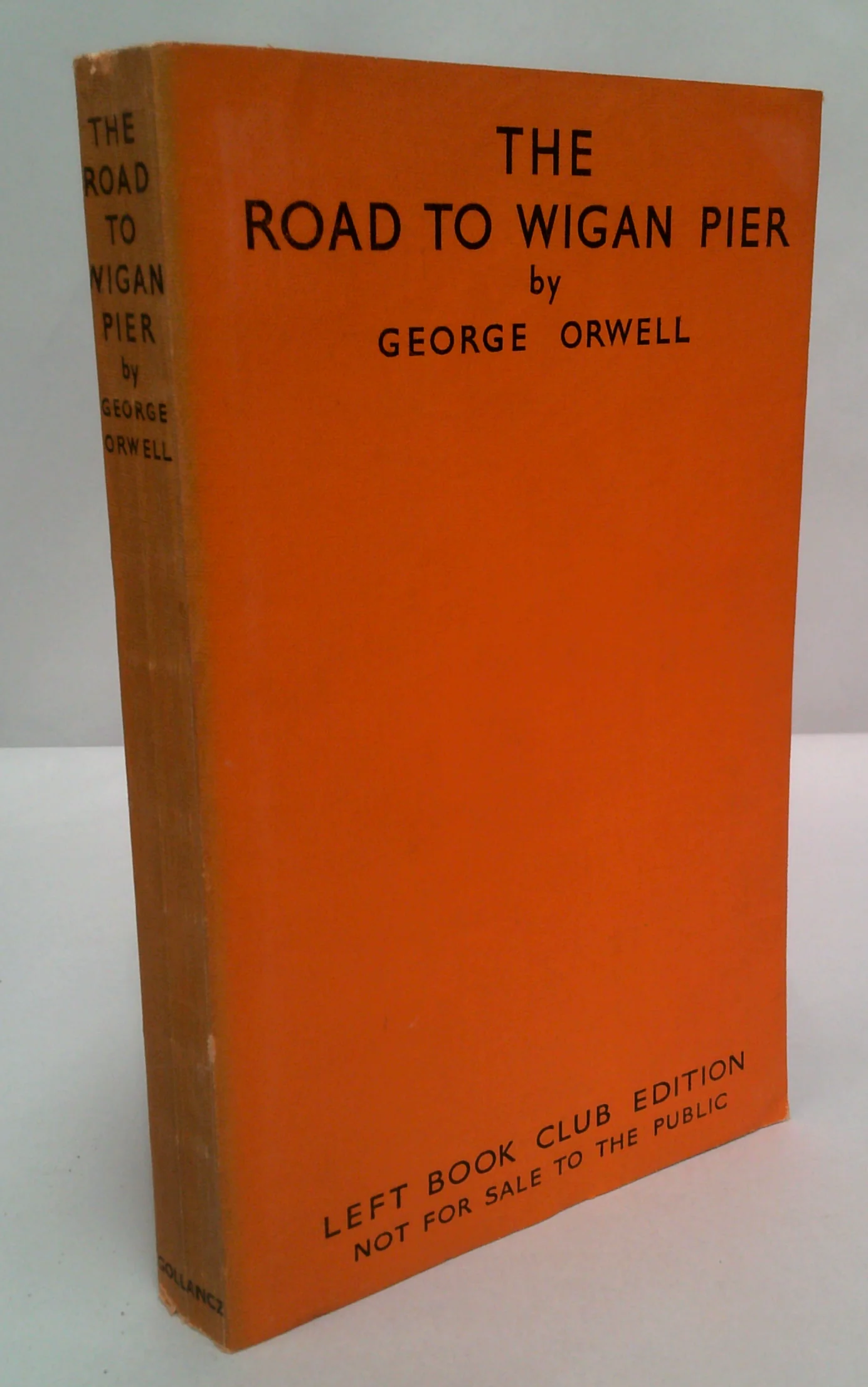
Condition: Good. Jacket: No dust jacket — orange card covers in good condition with a faded and creased spine. Page Condition: yellowed. Markings: No markings. Binding: Appears intact. Stickers/Labels: None. Membership pamphlet laid-in.
A landmark work of social documentary and political writing, The Road to Wigan Pier chronicles George Orwell's firsthand investigation into the desperate living and working conditions of the unemployed and working-class communities in the industrial north of England during the 1930s Depression. With unflinching honesty, Orwell details the grim realities of coal mining, overcrowded housing, poverty, and malnutrition, painting a portrait of a forgotten England that shocked the comfortable middle-class readership of its day. The second half of the book shifts into a provocative political essay in which Orwell argues passionately — and controversially — for socialism while simultaneously dissecting the class prejudices and intellectual snobbery he believes are crippling the left-wing movement. Written with the sharp wit, moral courage, and plain prose style that would define Orwell's enduring legacy, this remains one of the most powerful works of twentieth-century social criticism ever produced.
Product Information
Product Information
Shipping & Returns
Shipping & Returns
Description
Condition remarks:
Condition: Good. Jacket: No dust jacket — orange card covers in good condition with a faded and creased spine. Page Condition: yellowed. Markings: No markings. Binding: Appears intact. Stickers/Labels: None. Membership pamphlet laid-in.
A landmark work of social documentary and political writing, The Road to Wigan Pier chronicles George Orwell's firsthand investigation into the desperate living and working conditions of the unemployed and working-class communities in the industrial north of England during the 1930s Depression. With unflinching honesty, Orwell details the grim realities of coal mining, overcrowded housing, poverty, and malnutrition, painting a portrait of a forgotten England that shocked the comfortable middle-class readership of its day. The second half of the book shifts into a provocative political essay in which Orwell argues passionately — and controversially — for socialism while simultaneously dissecting the class prejudices and intellectual snobbery he believes are crippling the left-wing movement. Written with the sharp wit, moral courage, and plain prose style that would define Orwell's enduring legacy, this remains one of the most powerful works of twentieth-century social criticism ever produced.