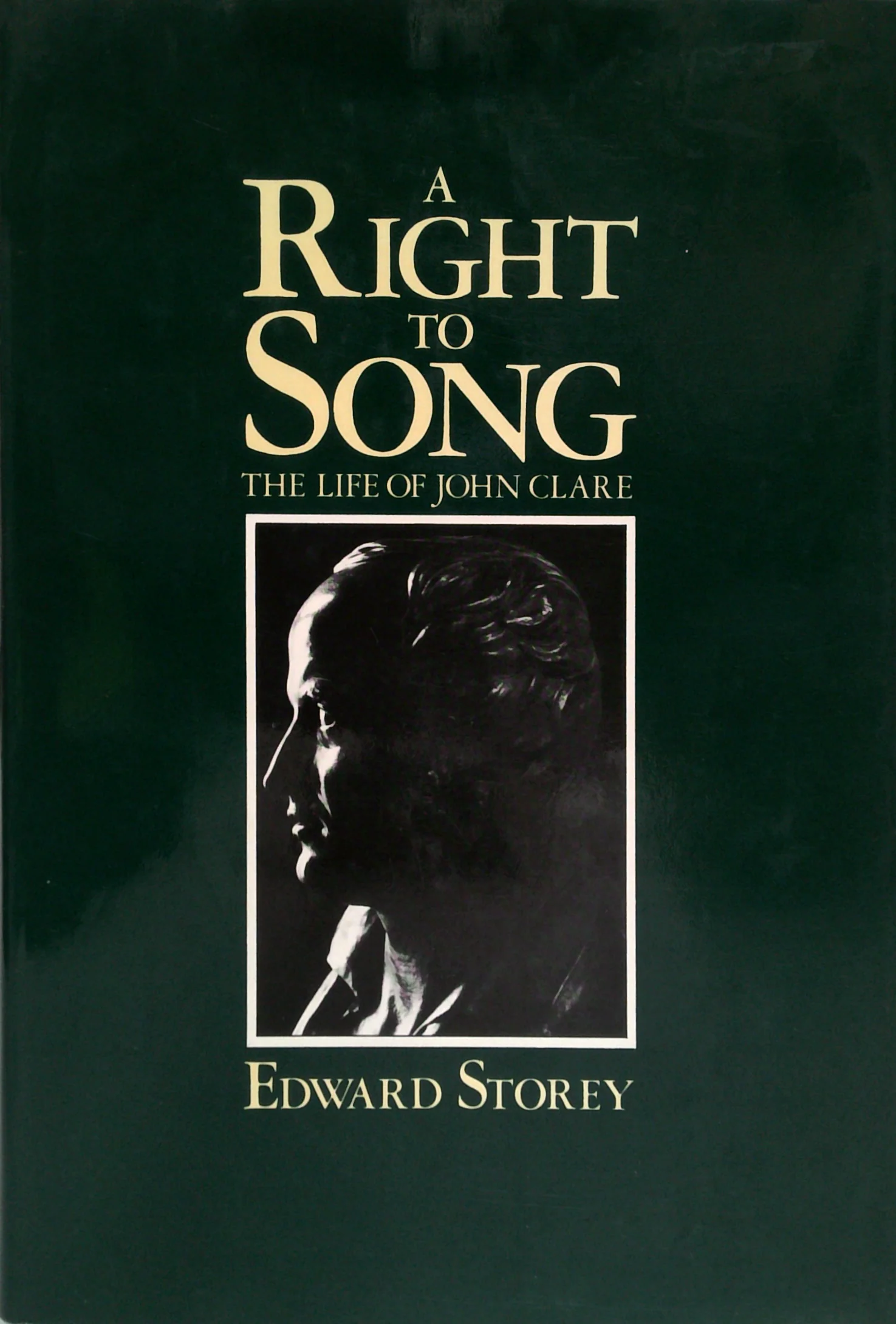
A Right To Song: The Life Of John Clare
Condition remarks:
Condition: Very Good. Jacket: Very good, clean with minimal wear. Page Condition: Good. Markings: No markings. Binding: Tight and secure.
A richly detailed literary biography, A Right to Song: The Life of John Clare chronicles the remarkable and turbulent life of John Clare (1793–1864), widely regarded as one of England's greatest rural poets. Edward Storey presents an authoritative and deeply sympathetic account of a man who rose from poverty and agricultural labour in Northamptonshire to achieve literary fame, only to spend the last decades of his life confined to a lunatic asylum. Drawing on Clare's own writings and contemporary accounts, Storey uncovers the social and economic pressures of the enclosure movement that uprooted the landscapes Clare immortalised in verse, illustrating how the destruction of the natural world he loved contributed to his personal tragedy. Written with both scholarly rigour and genuine warmth, this biography stands as an essential companion to the work of a poet whose voice — raw, observational, and fiercely local — resonates more powerfully than ever.
Product Information
Product Information
Shipping & Returns
Shipping & Returns
Description
Condition remarks:
Condition: Very Good. Jacket: Very good, clean with minimal wear. Page Condition: Good. Markings: No markings. Binding: Tight and secure.
A richly detailed literary biography, A Right to Song: The Life of John Clare chronicles the remarkable and turbulent life of John Clare (1793–1864), widely regarded as one of England's greatest rural poets. Edward Storey presents an authoritative and deeply sympathetic account of a man who rose from poverty and agricultural labour in Northamptonshire to achieve literary fame, only to spend the last decades of his life confined to a lunatic asylum. Drawing on Clare's own writings and contemporary accounts, Storey uncovers the social and economic pressures of the enclosure movement that uprooted the landscapes Clare immortalised in verse, illustrating how the destruction of the natural world he loved contributed to his personal tragedy. Written with both scholarly rigour and genuine warmth, this biography stands as an essential companion to the work of a poet whose voice — raw, observational, and fiercely local — resonates more powerfully than ever.