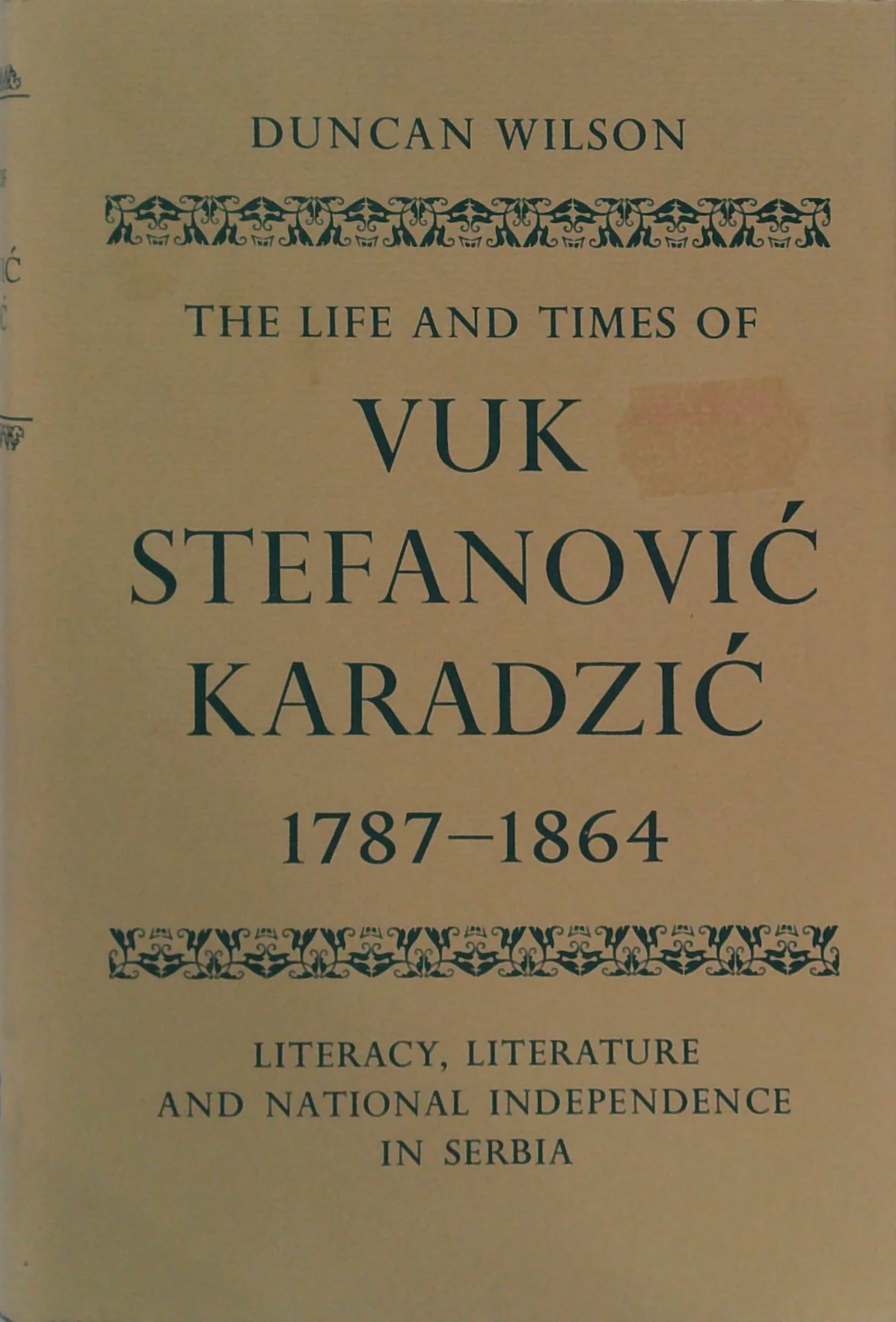
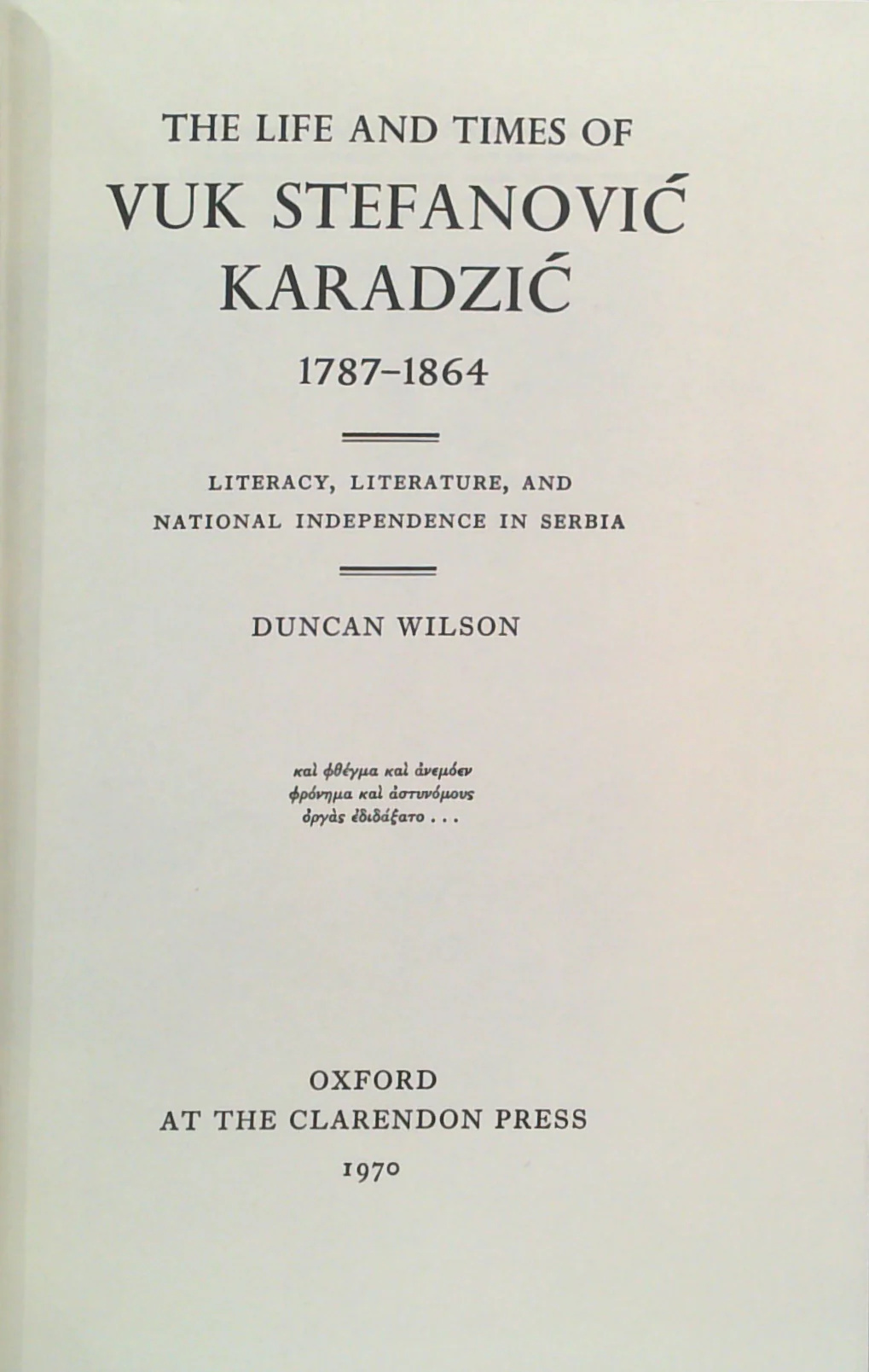
The Life And Times Of Vuk Stefanović Karadžić 1787–1864: Literacy, Literature And National Independence In Serbia
Edition: 1st ed.,
Condition remarks:
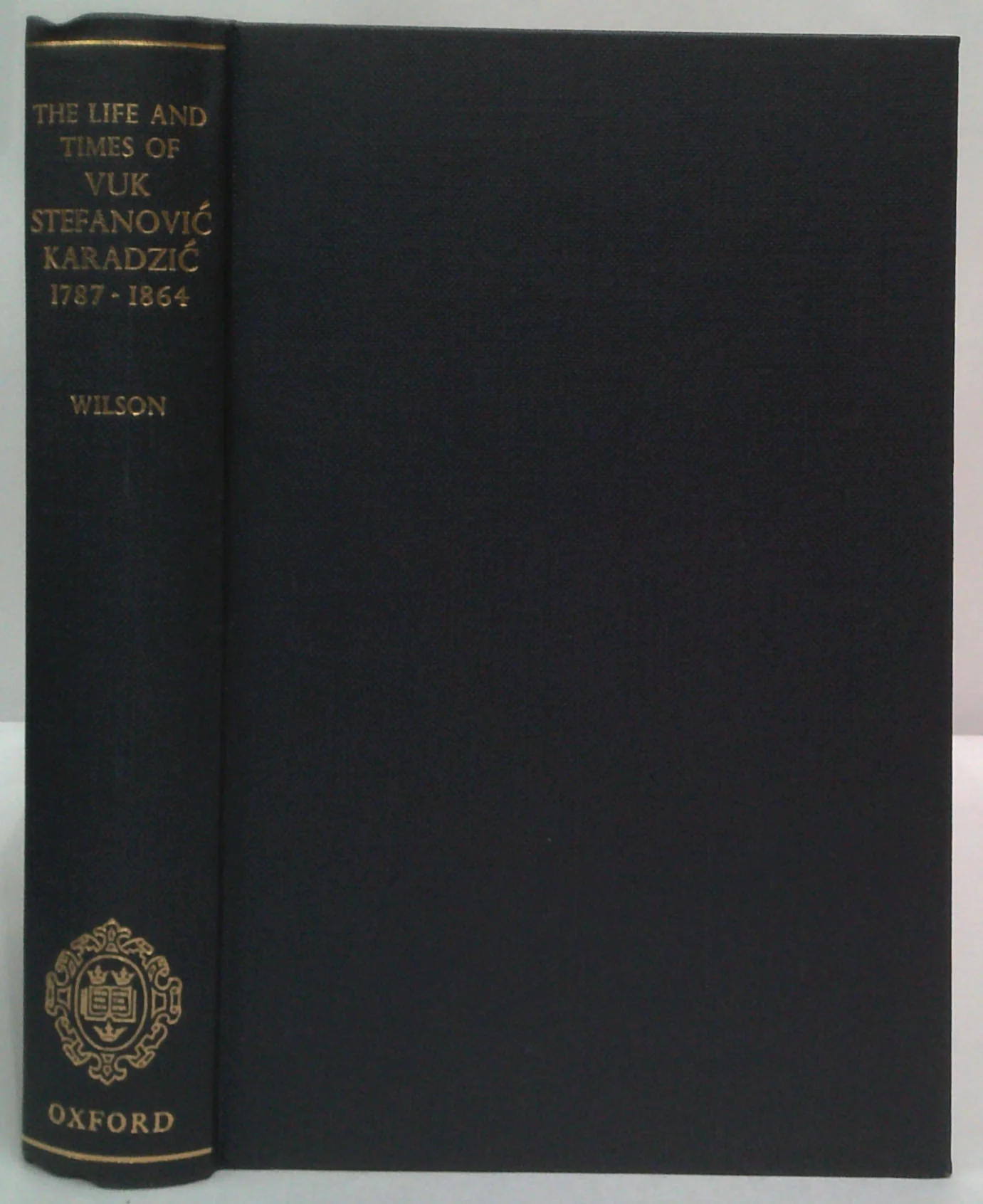
Condition: VG. Jacket: Faded, no tears; price clipped; sticker remnant. Page Condition: Good. Markings: No markings. Binding condition: Binding intact, no loose pages.
A scholarly biography of one of the most transformative figures in Serbian cultural history, this work chronicles the remarkable life of Vuk Stefanović Karadžić (1787–1864), the self-taught linguist, folklorist, and reformer who single-handedly modernised the Serbian language and alphabet. Wilson presents a richly detailed portrait of a man whose tireless efforts to codify vernacular Serbian speech gave his nation both a literary identity and a political voice during a period of intense struggle for independence. Set against the turbulent backdrop of Ottoman decline and European Romanticism, the narrative illustrates how Karadžić's collection of folk songs and poems captivated European intellectuals — including Goethe and the Brothers Grimm — while simultaneously fuelling a sense of Serbian national consciousness. Authoritative and meticulously researched, the book argues that literacy and literature were not merely cultural achievements for nineteenth-century Serbia, but essential instruments of national liberation.
Original: $50.78
-65%$50.78
$17.77Product Information
Product Information
Shipping & Returns
Shipping & Returns
Description
Edition: 1st ed.,
Condition remarks:
Condition: VG. Jacket: Faded, no tears; price clipped; sticker remnant. Page Condition: Good. Markings: No markings. Binding condition: Binding intact, no loose pages.
A scholarly biography of one of the most transformative figures in Serbian cultural history, this work chronicles the remarkable life of Vuk Stefanović Karadžić (1787–1864), the self-taught linguist, folklorist, and reformer who single-handedly modernised the Serbian language and alphabet. Wilson presents a richly detailed portrait of a man whose tireless efforts to codify vernacular Serbian speech gave his nation both a literary identity and a political voice during a period of intense struggle for independence. Set against the turbulent backdrop of Ottoman decline and European Romanticism, the narrative illustrates how Karadžić's collection of folk songs and poems captivated European intellectuals — including Goethe and the Brothers Grimm — while simultaneously fuelling a sense of Serbian national consciousness. Authoritative and meticulously researched, the book argues that literacy and literature were not merely cultural achievements for nineteenth-century Serbia, but essential instruments of national liberation.