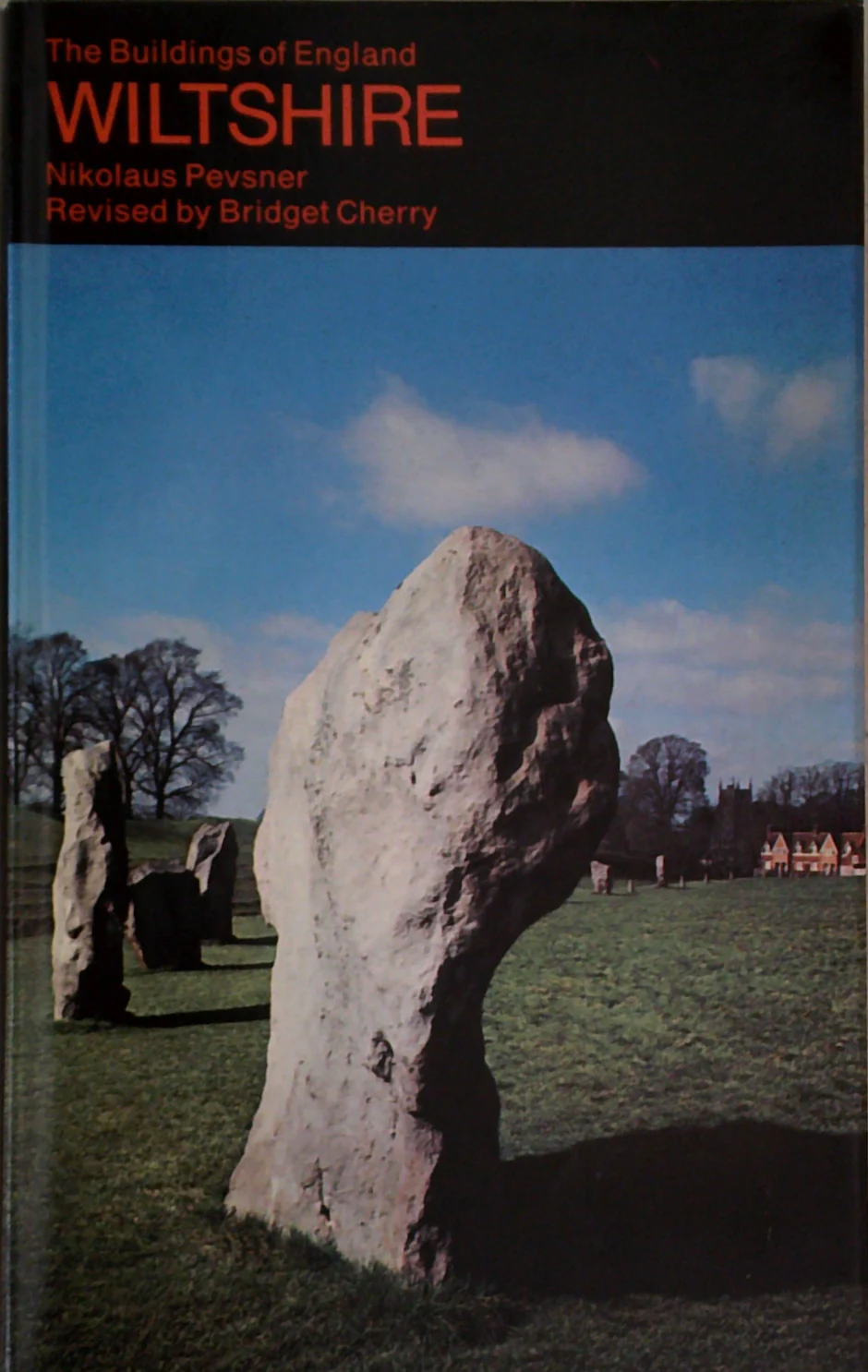
The Buildings Of England: Wiltshire
Condition remarks:
Book: Good
Jacket: Worn/faded, no tears
Pages: Good
Markings: No markings
A cornerstone of architectural scholarship, The Buildings of England: Wiltshire presents a meticulous county-by-county survey of Wiltshire's built environment, from its prehistoric monuments and medieval parish churches to its grand country houses and vernacular farm buildings. Part of Nikolaus Pevsner's monumental Buildings of England series — one of the most ambitious reference projects ever undertaken in British architectural history — this volume details each structure with authoritative precision, guiding readers through the county's rich architectural heritage in a systematic, gazetteer-style format. Revised and updated by Bridget Cherry, the text incorporates modern scholarship while preserving Pevsner's characteristically incisive and opinionated voice, which balances academic rigour with genuine aesthetic passion. Indispensable for architects, historians, and curious travellers alike, the volume illustrates how Wiltshire's landscape has been shaped over centuries by ecclesiastical ambition, aristocratic patronage, and local craftsmanship. Whether used as a field guide or a work of serious study, it remains an unmatched record of one of England's most architecturally diverse counties.
Original: $7.62
-65%$7.62
$2.67Product Information
Product Information
Shipping & Returns
Shipping & Returns
Description
Condition remarks:
Book: Good
Jacket: Worn/faded, no tears
Pages: Good
Markings: No markings
A cornerstone of architectural scholarship, The Buildings of England: Wiltshire presents a meticulous county-by-county survey of Wiltshire's built environment, from its prehistoric monuments and medieval parish churches to its grand country houses and vernacular farm buildings. Part of Nikolaus Pevsner's monumental Buildings of England series — one of the most ambitious reference projects ever undertaken in British architectural history — this volume details each structure with authoritative precision, guiding readers through the county's rich architectural heritage in a systematic, gazetteer-style format. Revised and updated by Bridget Cherry, the text incorporates modern scholarship while preserving Pevsner's characteristically incisive and opinionated voice, which balances academic rigour with genuine aesthetic passion. Indispensable for architects, historians, and curious travellers alike, the volume illustrates how Wiltshire's landscape has been shaped over centuries by ecclesiastical ambition, aristocratic patronage, and local craftsmanship. Whether used as a field guide or a work of serious study, it remains an unmatched record of one of England's most architecturally diverse counties.