The Trial Of Bukharin
Condition remarks:
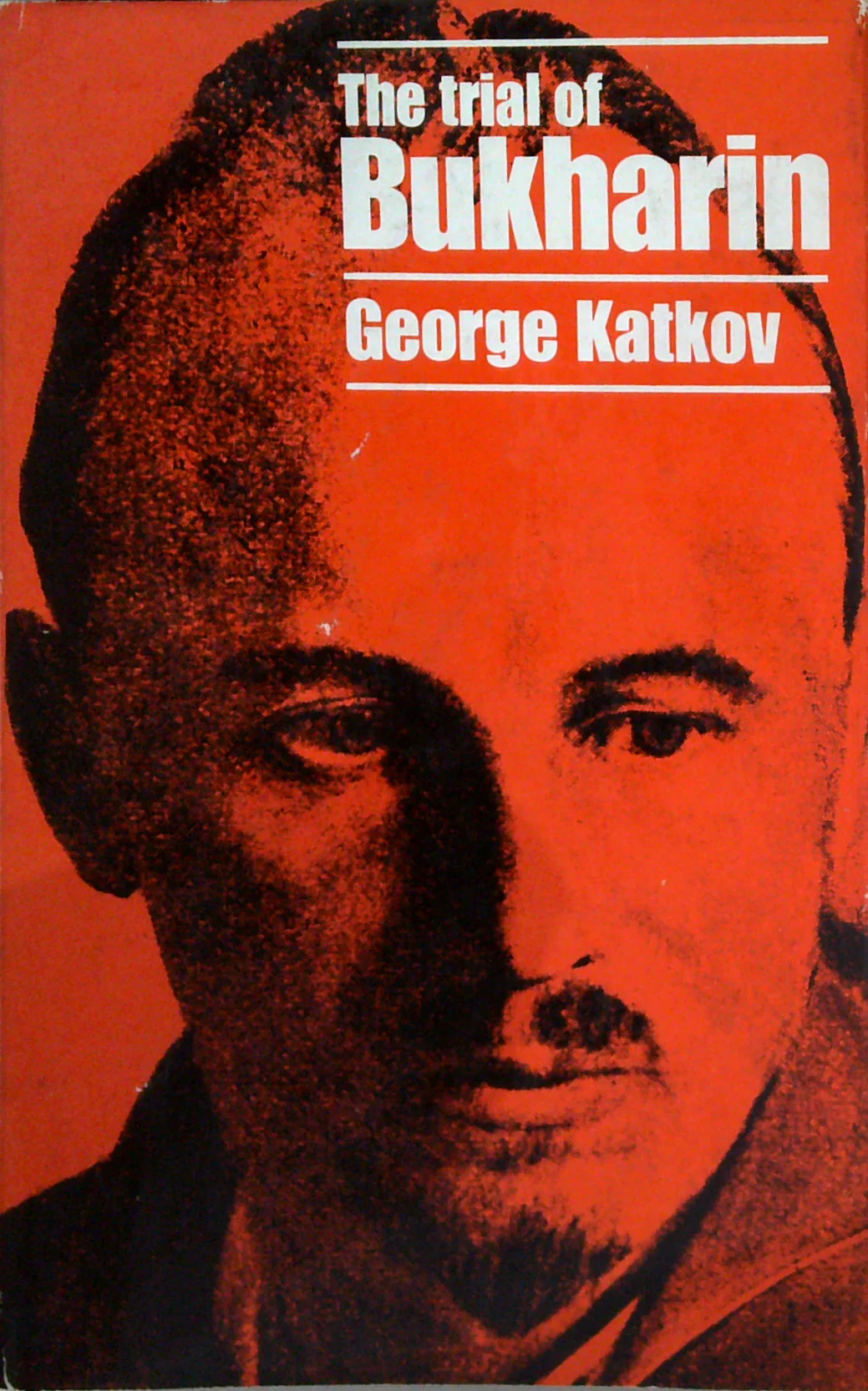
Condition: Good. Jacket: Worn/faded, no tears. Page Condition: Good. Markings: No markings visible. Binding: Intact. The dust jacket shows some wear and fading consistent with age, but the book block appears solid and well-preserved. The title page is clean and legible.
A gripping work of political history, The Trial of Bukharin chronicles one of the most dramatic and sinister episodes of Stalin's Great Purge — the 1938 show trial of Nikolai Bukharin, once a towering figure of the Bolshevik Revolution and a close confidant of Lenin. George Katkov, Fellow of St Antony's College Oxford, presents a meticulous and authoritative reconstruction of the proceedings, unmasking the mechanisms of Soviet political terror and the psychological warfare deployed to extract false confessions. Drawing on a sophisticated network of decorative deceit in words and actions, Katkov argues that Bukharin's capitulation was itself a final, coded act of defiance — a subversive signature hidden within his submission. Written with the precision of a scholar and the tension of a courtroom drama, this work stands as an essential document for understanding the brutality and ideological machinery of Stalinist Russia.
Product Information
Product Information
Shipping & Returns
Shipping & Returns
Description
Condition remarks:
Condition: Good. Jacket: Worn/faded, no tears. Page Condition: Good. Markings: No markings visible. Binding: Intact. The dust jacket shows some wear and fading consistent with age, but the book block appears solid and well-preserved. The title page is clean and legible.
A gripping work of political history, The Trial of Bukharin chronicles one of the most dramatic and sinister episodes of Stalin's Great Purge — the 1938 show trial of Nikolai Bukharin, once a towering figure of the Bolshevik Revolution and a close confidant of Lenin. George Katkov, Fellow of St Antony's College Oxford, presents a meticulous and authoritative reconstruction of the proceedings, unmasking the mechanisms of Soviet political terror and the psychological warfare deployed to extract false confessions. Drawing on a sophisticated network of decorative deceit in words and actions, Katkov argues that Bukharin's capitulation was itself a final, coded act of defiance — a subversive signature hidden within his submission. Written with the precision of a scholar and the tension of a courtroom drama, this work stands as an essential document for understanding the brutality and ideological machinery of Stalinist Russia.