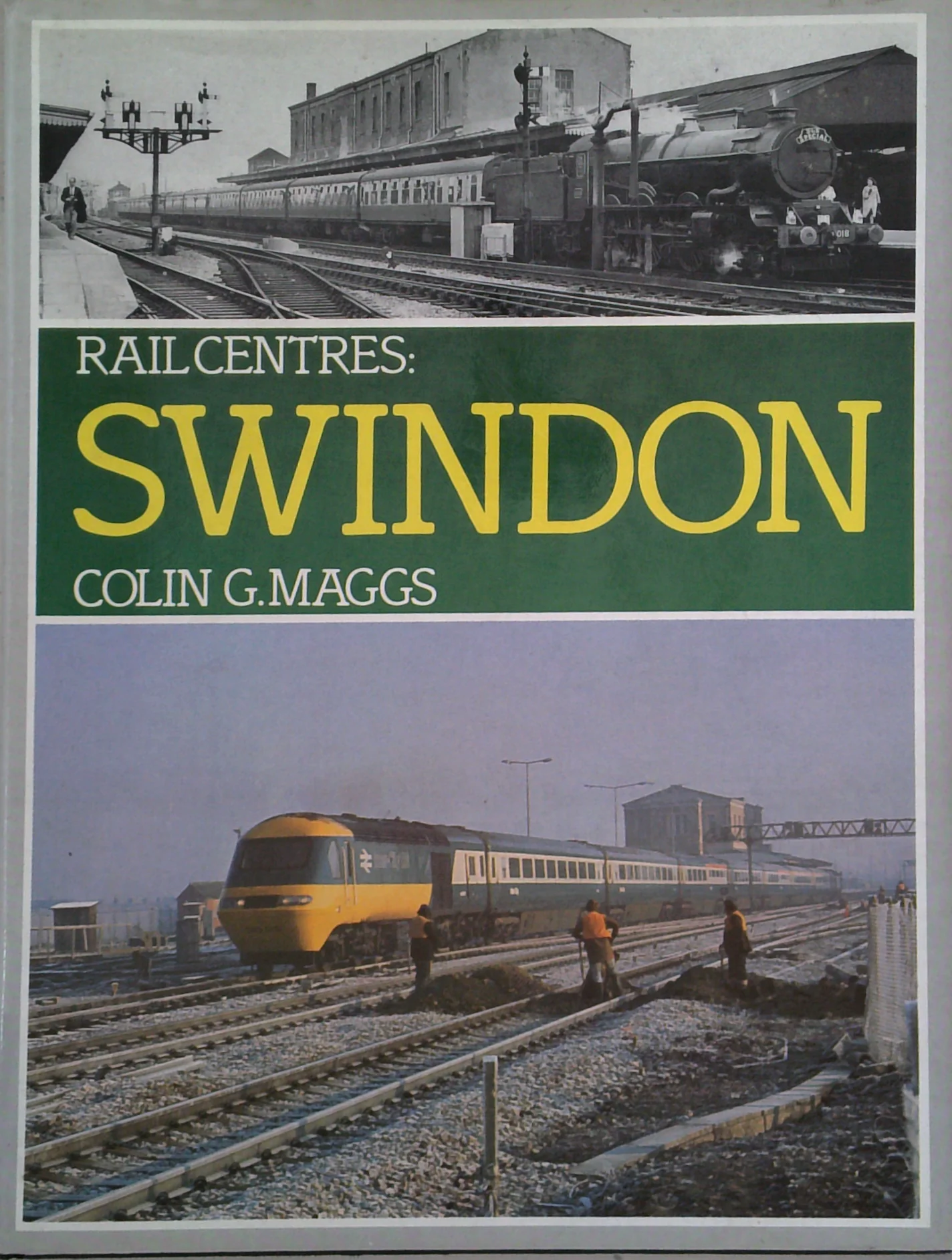
Rail Centres: Swindon
Condition remarks:
Book: Good
Jacket: Worn/faded, no tears
Pages: Good , price clipped
Markings: No markings
A focused work of British railway history, Rail Centres: Swindon chronicles the remarkable rise of Swindon as one of the most strategically vital locomotive and engineering hubs in the entire Great Western Railway network. Colin G. Maggs details the town's transformation from a modest Wiltshire settlement into a powerhouse of Victorian industrial ambition, driven almost entirely by the GWR's decision to establish its locomotive works there in the 1840s. With authoritative precision, the text presents the operational history of the railway centre, covering locomotive classes, depot workings, and the infrastructure that made Swindon synonymous with British engineering excellence. Maggs illustrates how the town's identity became inseparable from the railway, tracing the social and economic impact of the works on the local community across more than a century of operation. Written in an informative and methodical tone, this is an essential reference for railway enthusiasts, local historians, and anyone captivated by the golden age of British steam.
Product Information
Product Information
Shipping & Returns
Shipping & Returns
Description
Condition remarks:
Book: Good
Jacket: Worn/faded, no tears
Pages: Good , price clipped
Markings: No markings
A focused work of British railway history, Rail Centres: Swindon chronicles the remarkable rise of Swindon as one of the most strategically vital locomotive and engineering hubs in the entire Great Western Railway network. Colin G. Maggs details the town's transformation from a modest Wiltshire settlement into a powerhouse of Victorian industrial ambition, driven almost entirely by the GWR's decision to establish its locomotive works there in the 1840s. With authoritative precision, the text presents the operational history of the railway centre, covering locomotive classes, depot workings, and the infrastructure that made Swindon synonymous with British engineering excellence. Maggs illustrates how the town's identity became inseparable from the railway, tracing the social and economic impact of the works on the local community across more than a century of operation. Written in an informative and methodical tone, this is an essential reference for railway enthusiasts, local historians, and anyone captivated by the golden age of British steam.